Startup
GST Registration for New Businesses in India
Learn how new businesses should assess GST applicability, prepare registration information, set up invoicing, reconcile records, and manage ongoing responsibilities.
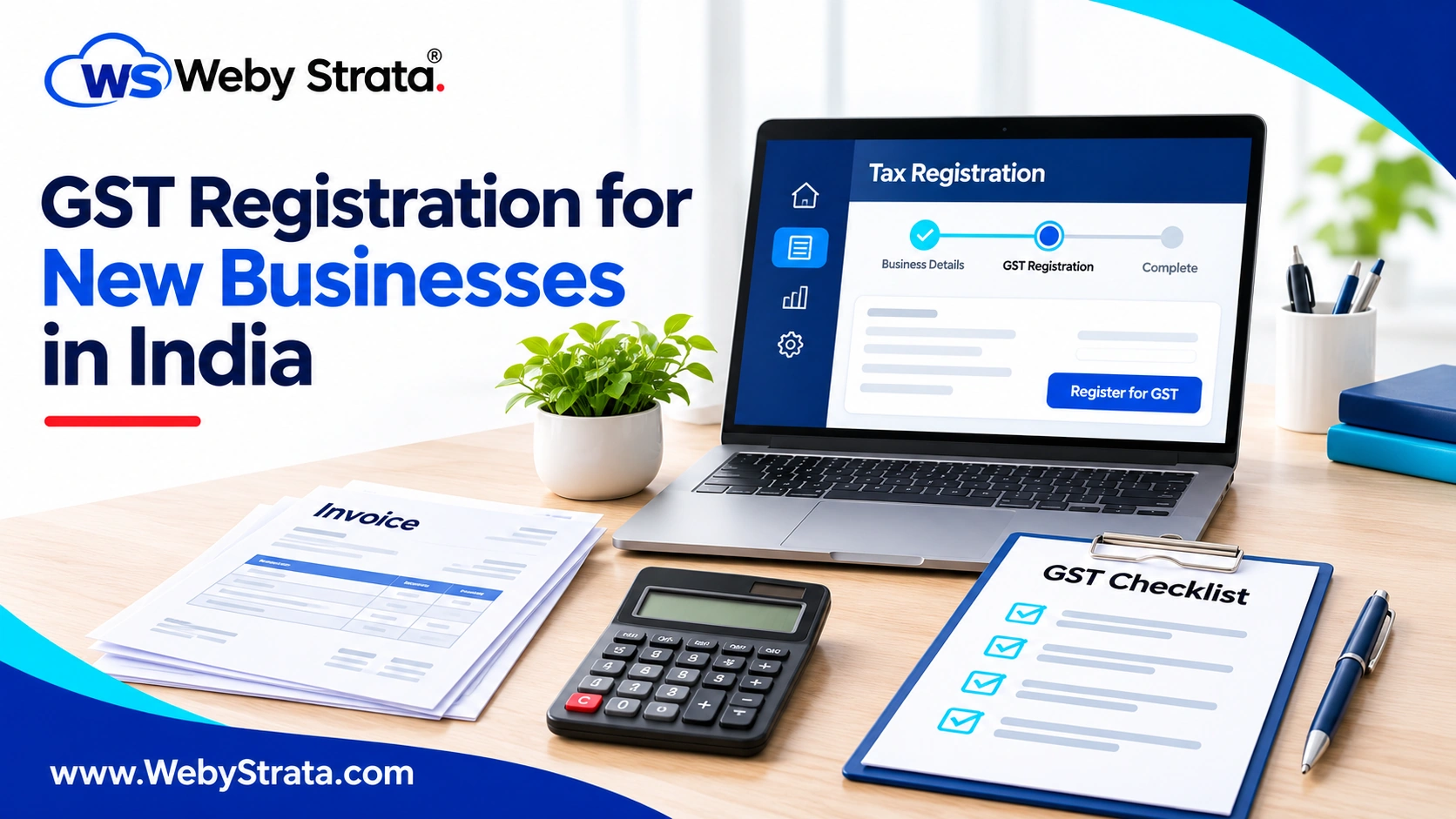
GST registration can affect invoicing, pricing, customer contracts, cash flow, and reporting. A new business should assess GST applicability before accepting taxable orders instead of treating registration as an afterthought.
Who this guide is for
This guide is for newly incorporated companies, LLPs, proprietors, agencies, online sellers, consultants, and small businesses deciding whether GST registration is required or commercially useful.
Why this matters
GST applicability depends on the business activity, location, turnover, supply type, customer base, and special registration rules. A generic threshold copied from an old article may not fit every business. The business should review its actual transactions and current rules before filing.
At-a-glance planning table
| Review area | Questions to answer | Record to keep |
|---|---|---|
| Business activity | What goods or services are supplied? | Service and product description |
| Place of supply | Where are customers and premises located? | Customer and address data |
| Turnover | What is the relevant turnover position? | Sales and accounting reports |
| Invoicing | What tax details must appear? | Invoice template and numbering |
| Reporting | Who will reconcile and file? | Compliance calendar |
Assess applicability
Start with the actual business model. Review goods, services, interstate supplies, online sales, marketplace arrangements, exports, exempt supplies, and the location of business premises. Do not assume that a small business is automatically outside GST or that registration is always beneficial. The correct conclusion depends on the facts and the current legal position.
Prepare the registration information
Keep PAN, constitution records, promoter or proprietor details, principal-place-of-business proof, bank information, authorized-signatory details, photographs where required, and contact information ready. Use consistent names and addresses across the business registration, bank account, invoices, and tax application.
Plan the principal place of business
The principal place of business should be supported by usable address evidence and should be monitored for notices. If the business works from a rented, shared, serviced, or home office, confirm which documents and owner consent are available before filing.
Set up tax-aware invoicing
A registered business should configure invoice numbering, customer details, taxable value, tax treatment, credit notes, debit notes, and payment records. The sales team should understand when a quote is tax-inclusive and when tax is shown separately.
Build reconciliation controls
GST work is connected to sales, purchases, bank receipts, expense records, credit notes, and payment collections. Reconcile the accounting records with invoices and returns instead of waiting until the filing deadline.
Manage amendments and closure
Changes to address, bank details, signatories, business activity, additional premises, or ownership may require updates. The business should also understand cancellation, return obligations, and record retention before it stops trading or changes structure.
Step-by-step implementation workflow
- Map the facts: Record the legal structure, owners, activity, location, employees, customers, and transaction types.
- Collect evidence: Prepare identity, address, registration, banking, contract, invoice, premises, and approval records relevant to the business.
- Assign responsibility: Name the person who prepares, reviews, files, stores, and renews each record.
- Build the operating control: Use a template, numbering system, approval step, reconciliation, or register so the process is repeatable.
- Review before commitment: Check the document, tax treatment, customer promise, payment, or licence before accepting a new risk.
- Review monthly: Check new transactions, changes, deadlines, notices, renewals, and missing evidence.
Set a clear document standard
Every important business record should show the correct legal or trading identity, date, responsible person, transaction or decision reference, and approval status. Use a consistent filename and folder location. A document that cannot be traced to an owner, customer, payment, licence, or decision is difficult to rely on during an audit, dispute, tax review, bank request, or investor discussion.
Separate preparation from review
Where possible, the person preparing a filing, invoice, payment, contract, or register should not be the only person reviewing it. A second review can catch wrong names, old addresses, duplicate invoice numbers, incorrect tax treatment, missing signatures, unsupported expenses, or expired approvals. Even a small business can use a simple checklist and second-person approval for high-risk items.
Connect the process to cash flow
Legal and administrative work affects money. A tax registration affects pricing, an invoice affects collection, a licence affects the launch date, a bank control affects payment risk, and an accounting record affects decisions. Add the financial effect to the planning sheet. Record expected fees, professional costs, deposits, taxes, refunds, payment timing, and renewal costs before committing the business.
Protect sensitive business information
Applications, tax records, bank statements, invoices, employee files, contracts, customer data, and intellectual-property documents should not be stored in unrestricted personal folders or shared casually in messaging apps. Use access controls, backups, secure transfer, individual logins, and a process for removing access when a staff member or contractor leaves.
Know when professional review is useful
Professional advice is especially valuable when the business has foreign participants, multiple locations, regulated products, employees, cross-border transactions, intellectual property, investment, borrowing, complex ownership, or a change in legal structure. A professional can help interpret the current requirement, but the business should still retain its own decision record and responsibility calendar.
Review the setup after every major change
Repeat the review when the business adds a product, enters a new state, hires employees, opens a location, accepts an international customer, changes its bank, changes ownership, signs a large contract, or stops an activity. Small changes can affect taxes, licences, contracts, payroll, data handling, invoices, and records. A monthly review keeps the setup aligned with the real business.
Keep evidence of decisions
Save the reason for each important decision, not only the final certificate or form. Record who reviewed the requirement, which business facts were considered, which documents were supplied, the effective date, and the next review date. This history helps a new employee or professional understand the setup without repeating the entire investigation. It also gives the founders a clear record when a customer, bank, regulator, auditor, investor, or partner asks why a particular process was adopted.
Create a small-business control calendar
Use one calendar for filing dates, payment dates, invoice follow-ups, bank reconciliation, payroll, licence renewals, contract reviews, insurance, document backups, and management reports. Assign a primary owner and a backup owner for each task. A calendar should show the action, due date, evidence required, completion status, and escalation step. This simple system is more useful than relying on memory or scattered reminders.
Practical example
A small design agency serves local businesses and clients in several states. Before registering, it maps customer locations, invoices, advance payments, expenses, and the address from which services are supplied. The agency then configures its invoice template and monthly reconciliation process so registration does not become a separate disconnected task.
Practical checklist
- Review current GST applicability
- Map goods, services, and customer locations
- Prepare PAN and constitution records
- Confirm principal-place-of-business proof
- Identify the authorized signatory
- Create a compliant invoice template
- Reconcile sales, purchases, and bank records
- Assign return and amendment responsibility
Common mistakes to avoid
- Using an outdated threshold without checking facts
- Registering with inconsistent address details
- Issuing invoices before deciding the tax treatment
- Ignoring credit notes and advance payments
- Failing to reconcile books and returns
- Missing amendment or return deadlines
- Mixing personal and business transactions
Frequently asked questions
Does every new business need GST registration?
No. Applicability depends on the business facts and current rules. Review the activity, turnover, location, and transaction pattern before deciding.
Can a business register voluntarily?
Voluntary registration can create commercial benefits and ongoing responsibilities. Compare customer expectations, pricing, compliance effort, and cash flow before choosing it.
Who should manage GST compliance?
A trained internal owner or qualified tax professional should manage invoices, reconciliations, returns, notices, and changes.
Should GST be checked before launch?
Yes. The decision can affect pricing, invoices, contracts, accounting setup, and customer onboarding.
Conclusion
The correct process depends on the business structure, location, activity, ownership, employees, customers, and current rules. Use this guide as a practical planning resource, maintain records carefully, and obtain professional advice before filing an important legal, tax, trade, or compliance document.
Related Articles