Domain
Types of TLDs Explained: gTLD vs ccTLD vs sTLD (2026 Guide)
Types of TLDs Explained: gTLD vs ccTLD vs sTLD (2026 Guide) Types of TLDs Explained is a topic every website owner, business, blogger, and startup should understand before registering a domain name. A Top-Level…
Types of TLDs Explained: gTLD vs ccTLD vs sTLD (2026 Guide)
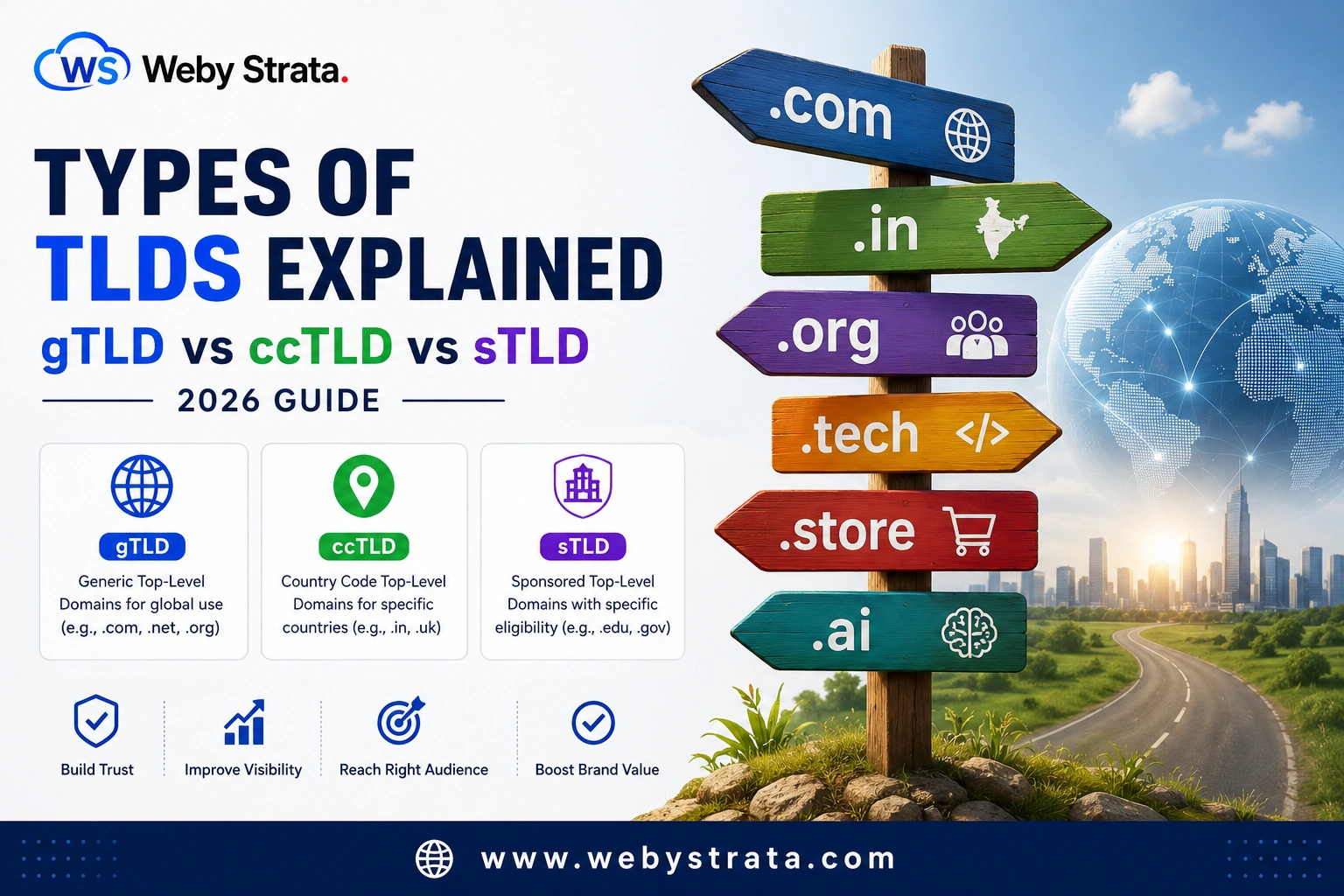
Types of TLDs Explained is a topic every website owner, business, blogger, and startup should understand before registering a domain name. A Top-Level Domain (TLD) is the extension that appears at the end of a domain name, such as .com, .net, .org, .in, or .ai. Different TLDs serve different purposes, from global branding to country-specific targeting and industry-focused websites. In this guide, WebyStrata explains the major types of TLDs, their benefits, and how to choose the right one for your website in 2026.
A Top-Level Domain (TLD) is the last part of a domain name and helps identify the purpose, audience, or location of a website. The most common TLD categories include Generic TLDs (gTLDs), Country Code TLDs (ccTLDs), and Sponsored TLDs (sTLDs). Understanding these categories can help you make better decisions when selecting a domain name for your business or project.
How Does a TLD Fit into a Domain Name?
A domain name consists of multiple components:
| Component | Example |
|---|---|
| Protocol | https:// |
| Subdomain | www |
| Domain Name | webystrata |
| TLD | .com |
The TLD helps internet systems determine which registry manages the domain extension and plays a role in how users perceive your website.
What Are the Primary Categories of TLDs?
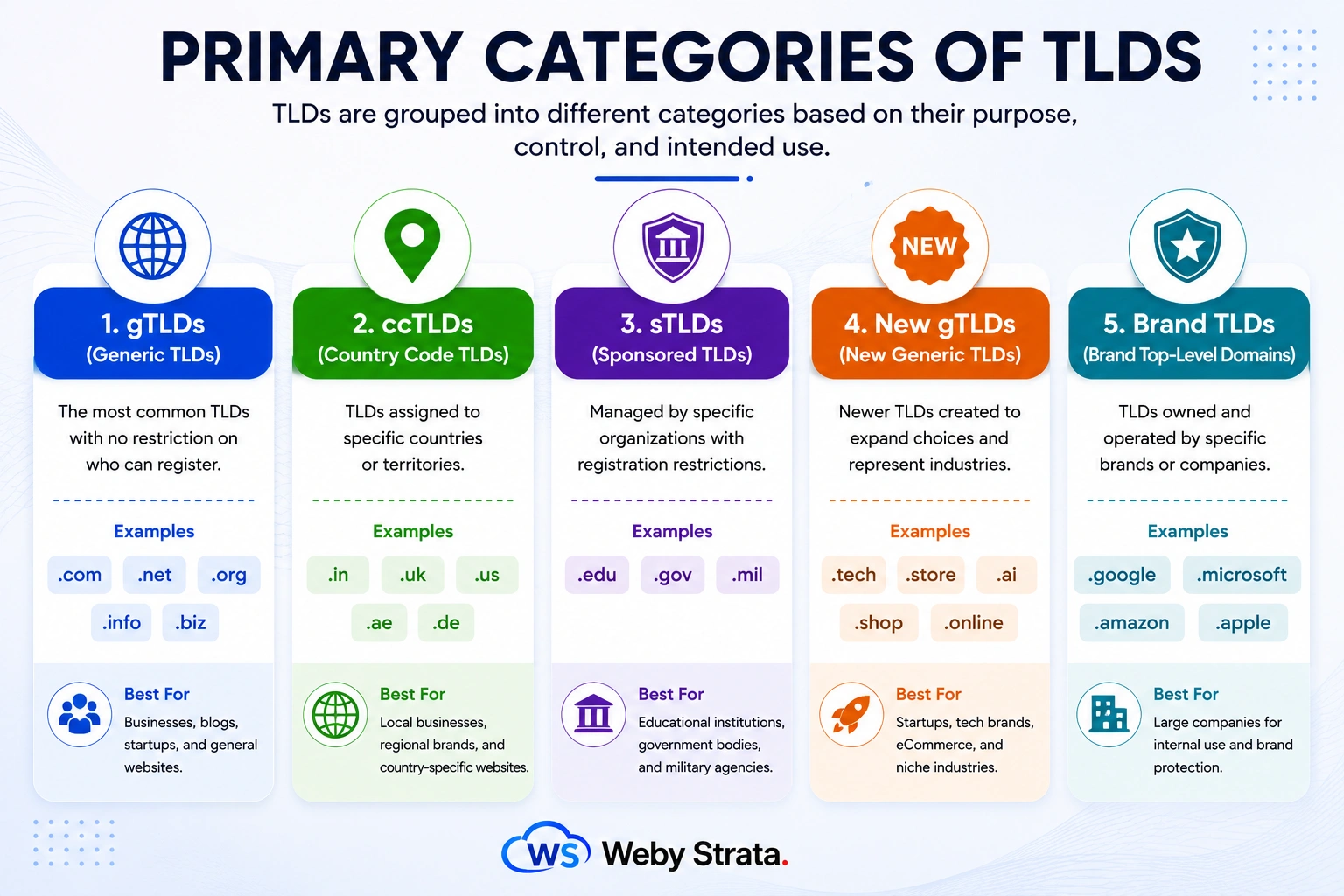
Before registering a domain, it is important to understand the different types of TLDs available.
1. Generic TLDs (gTLDs)
Generic TLDs are the most widely used domain extensions on the internet. They are not restricted to any specific country or organization.
Popular Examples
- .com
- .net
- .org
- .info
- .biz
Best For
- Businesses
- Startups
- Blogs
- E-Commerce Websites
- Personal Brands
Advantages
✔ Global Reach
✔ Easy Recognition
✔ Trusted by Users
✔ Suitable for Almost Any Industry
2. Country Code TLDs (ccTLDs)
Country Code TLDs are associated with specific countries and regions.
Popular Examples
- .in (India)
- .uk (United Kingdom)
- .us (United States)
- .ae (United Arab Emirates)
- .de (Germany)
Best For
- Local Businesses
- Regional Brands
- Country-Specific Websites
Advantages
✔ Strong Local Presence
✔ Better Regional Branding
✔ Improved Local Trust
3. Sponsored TLDs (sTLDs)
Sponsored TLDs are managed by specific organizations and have registration restrictions.
Popular Examples
- .edu
- .gov
- .mil
Best For
- Educational Institutions
- Government Organizations
- Military Departments
Advantages
✔ High Authority
✔ Strong Trust Factor
✔ Restricted Usage
4. New Generic TLDs (New gTLDs)
New gTLDs were introduced to provide more domain choices and industry-specific branding opportunities.
Popular Examples
- .tech
- .store
- .shop
- .online
- .site
- .cloud
- .app
Best For
- Technology Companies
- Startups
- E-Commerce Stores
- Digital Businesses
Advantages
✔ Better Domain Availability
✔ Industry-Relevant Branding
✔ Modern & Memorable
5. Brand TLDs
Large companies can register and manage their own brand-specific TLDs.
Examples
- .microsoft
- .amazon
Advantages
✔ Enhanced Brand Protection
✔ Corporate Identity
✔ Better Brand Recognition
Which TLDs Are Dominating in 2026?
Traditional domain extensions continue to dominate, while newer TLDs are rapidly gaining popularity.
.COM – Universal Business Standard
The .com extension remains the most popular and trusted domain extension globally.
Core Benefits
✔ Highest Brand Recognition
✔ Easy to Remember
✔ Trusted by Customers
✔ Ideal for Businesses
Example: WebyStrata.com , WebyCare.com
.NET – Internet Industry Classic
The .net extension is commonly used by technology companies and internet-related businesses.
Core Benefits
✔ Professional Appearance
✔ Trusted Alternative to .com
✔ Popular Among Tech Companies
Example: speedtest.net
.ORG – Purpose-Driven Presence
The .org extension is traditionally associated with nonprofit organizations and educational projects.
Core Benefits
✔ Strong Credibility
✔ Community Focused
✔ Globally Trusted
Example: wikipedia.org
.IN – India’s Trusted Domain
The .in extension is ideal for businesses targeting Indian customers.
Core Benefits
✔ Local Trust
✔ Regional Branding
✔ Popular in India
Example: business.in
.XYZ – Modern & Flexible
The .xyz extension has become popular among startups and innovative digital brands.
Core Benefits
✔ Modern Branding
✔ High Availability
✔ Suitable for Any Industry
Example: brand.xyz
.STORE – Built for Selling
The .store extension is designed specifically for online stores and retail businesses.
Core Benefits
✔ Clear E-Commerce Identity
✔ Better Brand Messaging
✔ More Domain Availability
Example: yourbrand.store
.TECH – Technology First
The .tech extension is widely used by software companies and technology startups.
Core Benefits
✔ Technology-Focused Branding
✔ Startup Friendly
✔ Industry Recognition
Example: startup.tech
.DEV – Developer Preferred
The .dev extension is popular among software developers and technical projects.
Core Benefits
✔ Secure by Default
✔ Developer Recognition
✔ Ideal for Technical Projects
Example: project.dev
.AI – AI-Focused Identity
The .ai extension is the preferred choice for artificial intelligence startups and SaaS platforms.
Core Benefits
✔ AI Industry Alignment
✔ Investor Appeal
✔ Modern Technology Branding
Example: perplexity.ai
Who Manages the TLD Ecosystem?
The global domain name system is managed by ICANN (Internet Corporation for Assigned Names and Numbers).
ICANN is responsible for:
- Managing domain policies
- Coordinating domain registries
- Accrediting registrars
- Maintaining DNS stability
When you register a domain through WebyStrata, the registration is processed through accredited domain registrars operating under ICANN standards.
How to Choose the Right TLD
Consider the following before selecting a domain extension:
Choose .COM If:
- You want global reach
- You are building a business website
- You need maximum trust
Choose .IN If:
- You target Indian customers
- You operate locally within India
Choose .STORE If:
- You run an online store
- You sell products online
Choose .AI or .TECH If:
- You run a technology startup
- You build AI or SaaS products
Choose .ORG If:
- You manage a nonprofit organization
- You run a community-driven project
Conclusion
Understanding Types of TLDs Explained: gTLD vs ccTLD vs sTLD helps you make informed decisions when registering a domain name. While gTLDs provide global flexibility, ccTLDs strengthen regional branding, and sTLDs offer credibility for specialized organizations. Selecting the right domain extension can improve brand recognition, build trust, and support long-term business growth.
Related Articles